
A fresh start
The key details are straightforward. Use the difficulty links whenever you want to try two or four suits. There is no countdown or entry fee for the game. The homepage starts a one-suit game of Spider Solitaire with spades. Every deal contains 104 cards, so each rank appears eight times.
Eight complete runs
The key details are straightforward. Clear eight runs to finish the deal. The game removes a full face-up run automatically when it forms at the bottom of a column. A completed run contains thirteen spades in order from King down to Ace. The run counter shows how many complete sequences you have collected.
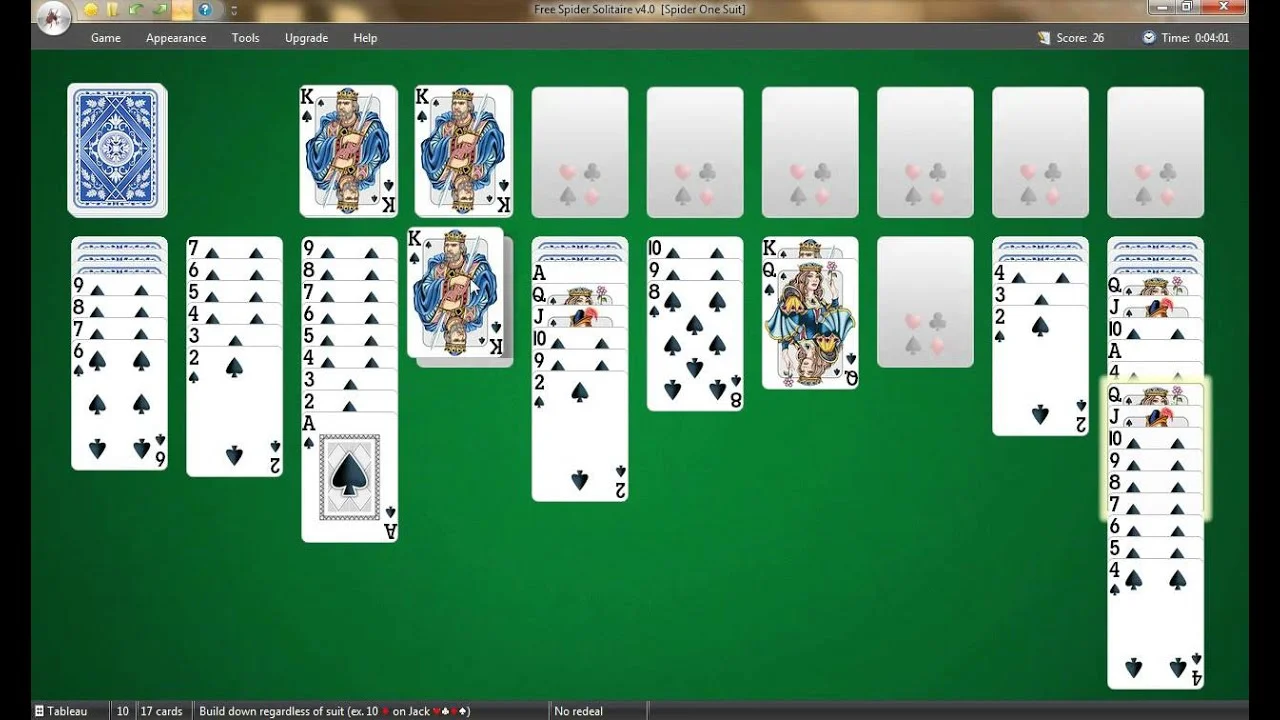
Read the opening layout
Here is what to know. The remaining fifty cards form five stock deals of ten cards each. Only the bottom card of each starting column is face up. The opening tableau has ten columns and 54 cards. The first four columns contain six cards each, and the other six contain five.
Find a legal destination
The key details are straightforward. Place a face-up card on another exposed card exactly one rank higher. For example, a seven can move onto an eight, while a queen can move onto a king. An Ace ends a descending sequence and cannot accept another card on top. A descending same-suit sequence can move together as one group.
Use an empty column
On this website, the following points apply. Every column must contain a card before you can deal from the stock. Any exposed card or movable sequence can enter an empty column. An empty column can help you separate a sequence or uncover a hidden card. You do not have to reserve empty columns for Kings.
Turn over hidden cards
Revealing a card gives you another possible destination or starting point. A move that uncovers a card may be more useful than one that merely rearranges a visible sequence. Look across the whole tableau before committing a valuable empty column. Removing the last face-up card above a hidden card turns that hidden card face up.
Deal from the stock
On this website, the following points apply. You cannot choose which column receives an individual stock card. The stock button deals one face-up card onto each of the ten columns. A stock deal is available only when no column is empty. Each deal may open a useful move or interrupt a sequence you were building.
Ways to move cards
Here is what to know. The Hint button points to a legal option without promising a winning solution. You can also drag a card or a same-suit sequence to another column. Click or tap the first card of a movable sequence, then choose a destination column. Undo reverses the last successful move or stock deal while history is available.
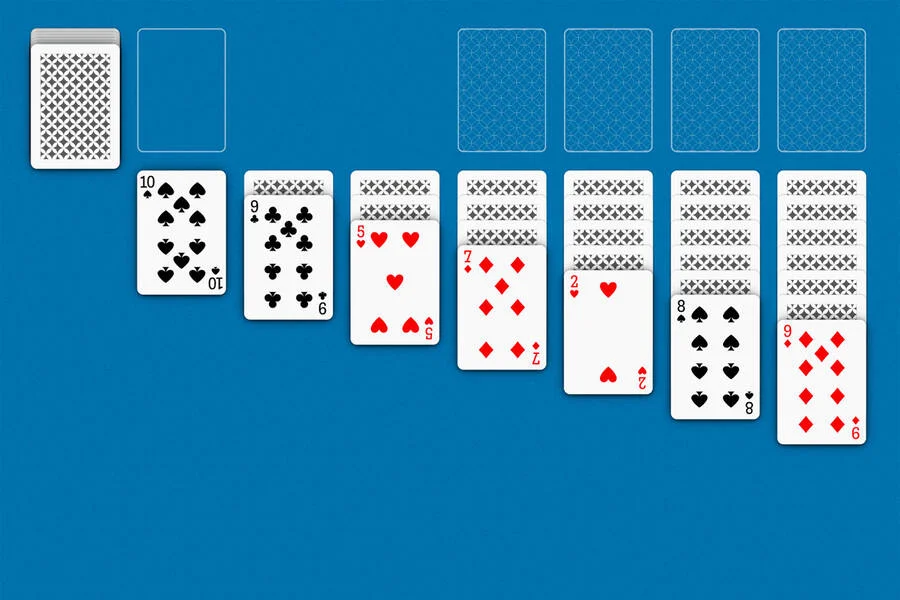
Progress on this device
The key details are straightforward. Saved progress stays on this domain and does not transfer to another device. When saving is enabled, this browser stores your current game and recent undo history locally. The Privacy & Cookie Settings page lets you turn saving off and clear game data. Refreshing the page resumes the saved deal for the selected difficulty.
Choose your challenge
Here is what to know. One suit gives you a useful place to learn descending sequences and empty-column moves. Four suits requires you to track spades, hearts, clubs and diamonds. The How to Play and Tips & Strategy pages explain the same rules used by the game. Two suits adds the need to organize spades and hearts separately.